
Most career advice starts from the outside in: fix the system, wait for the bias to fade, hope the room changes. Dr. Candace Steele Flippin works the other way around. A researcher, author, and executive at a global membership organization, she has spent years studying the things people can actually do, today, themselves, to move their careers forward, no matter what’s happening around them.
That research became the SHAPE Career Assessment: a science-backed tool grounded in self-efficacy theory. What started as a way to help a few mentees has grown into a proprietary coaching platform used by certified coaches and organizations like the Calibr Global Leadership Network to develop leaders at scale, all built and scaled on Pointerpro.


Confidence opens the door. Self-efficacy walks you through it. – Candace Steele Flippin (Communications Executive | Leadership Researcher | Author)
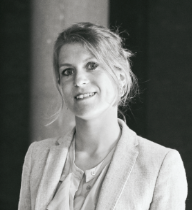
Candace: I’m Dr. Candace Steele Flippin. I’m a researcher and an author, and I work as an executive for a nonprofit membership organization with members around the world. My background is in communications and marketing, but my own work centers on career and professional development.
It’s grounded in self-efficacy theory, the idea that, whatever’s happening around you, there are concrete things you can do to put yourself in a better position to move forward. That research is what led me to create the SHAPE Career Assessment. I’m also a TEDx speaker, and I’m currently working on my fourth book.
Candace: Confidence is your belief in yourself. Self-efficacy is your belief that if you’re going to do something, it will work out. I think it takes confidence to the next level.
Here’s an example. Say you tell someone, “I’m going to try X,” and they say, “you can’t do that”, but you go and do it anyway. That’s your self-efficacy being dialed up. Something in your background, your belief set, your experience tells you it’s okay. You give yourself permission to try, because you believe it will work out, or you’ll learn something, or maybe you’ll start over, but you believe you can do it.
Candace: That sometimes, regardless of what’s happening externally, there are things you can do yourself to put yourself in a better position to move forward in your career.
When I’m speaking with groups, I’ll often say: I wish there were something I could do to personally address all of the “isms” and bias we encounter, but those things are going to take time to change across society. So instead, I research the interventions you can do to move forward, and that are scientifically proven.
Candace: The SHAPE Career Assessment was built off research into the areas that help someone increase their self-efficacy. Because of my background in communications and marketing, I made a nifty title out of it, each letter is an acronym for one of the factors:
- S – Save: your level of financial stability and awareness.
- H – Hard work: how your effort aligns with the person evaluating you.
- A – Advocate: using your voice effectively. In the studies, this was the factor most highly correlated to career self-efficacy, by far.
- P – Perseverance: your ability to navigate and overcome difficulty.
- E – Educate: your level of self-awareness and having a growth mindset.

Candace: I believe psychometric tools have real value. Self-awareness is closely linked to growth. So to the extent that you have a tool that’s validated and has scientific rigor, one that broadens your self-awareness, improves your skills, your communication, your mindset, or gives you constructive information about how you show up and are perceived, then yes, I see the value.
I’ve seen it in my own work; many of my clients are HR leaders, and they’ve told me the tool has been meaningful. And as a user, I’ve taken plenty of assessments that have been valuable to my own growth as an executive. So I’m firmly in the camp that they’re effective, but how they’re used, why they’re used, and how the information is delivered all matter. That can either undermine the effectiveness or enhance it.
Candace: My clients fall into one of two categories. The first is organizations looking for a tool to help with professional development, mostly professional services firms, or business and employee resource groups looking for a development experience for their people.
The second is individuals who want to boost their self-efficacy directly, often people who’ve come across my thought leadership and want to develop using my methodology.
I needed someone who could help me develop it, use a sound scoring methodology, and produce a report, and as an individual researcher, I had real difficulty finding that. – Candace Steele Flippin (Communications Executive | Leadership Researcher | Author)
Candace: My journey was a little atypical. At the end of 2019, several colleagues and mentors convinced me to do a TEDx talk. I was very busy, but I applied, I was accepted, and I gave the talk in February 2020, right before COVID.
I was surprised by how many women came to me afterward and said, “I love that, do you have a book or an app about this method?” I didn’t. So I explored it, and I ended up writing a book. Then people came back and said, “I love what’s in this book, do you have an assessment?” And I didn’t have that either.
So I started researching it, and it was a lot more complex than I expected, because of the type of assessment I was envisioning. I needed someone who could help me develop it, use a sound scoring methodology, and produce a report, and as an individual researcher, I had real difficulty finding that.
Candace: Yes. I was really pleased when I found Pointerpro, because you had ReportR and Professional Services. It let me work on the customization and develop a tool that keeps getting better every year, so I was able to launch it and start helping the women who were coming to me.
What mattered just as much was what it freed me up to do. In the beginning, people could take the assessment while I slept, the tools and resources were right there, and I could run the whole thing independently. It gave me back time and increased my capacity.
When I created the SHAPE Career Assessment, I needed a platform that could do more than collect responses. I needed a solution that could generate highly personalized reports at scale while providing a professional, intuitive user experience. Pointerpro stood out because it let me translate a complex assessment methodology into a customized experience for each participant. I also love having the onboarding portal. I can go back and look at things to give myself a refresher.
The support has been part of that too; whenever I’ve needed to expand or had a question, I could reach out and get a fairly timely response. And one of the best things is that I can interact with a human: the chat experience is efficient, and I use it, but when I need to escalate something, I like knowing a real person can get back to me. So it’s been a good partnership.
ReportR is the Pointerpro plan for turning an assessment into an automated, personalized report for each respondent. With a ReportR license, the Pointerpro professional services team builds your first report with you, so you can launch without technical skills yourself.
Assessments can scale without losing their personal impact. – Candace Steele Flippin (Communications Executive | Leadership Researcher | Author)
Candace: It did. I went back to Pointerpro three times, really.
The first time was to build the individual assessment with ReportR, so someone could take it after reading my book or hearing me speak.
The second time was when organizations started coming to me saying, “people took this, we’d like to use it with our teams.” I needed a way to scale and automate it, handling payment, processing the data, getting the reports out, so it could run independently.
The third time was when a client, Calibr, a leadership and members network, came to me. They have managers and leaders at various stages of development; they liked my content, and they wanted me to develop an instrument specifically for their membership. So I worked with your team through ReportR again to expand on my research and build a system for them.
Candace: What stands out most is how thoughtfully Calibr has integrated the assessment into their broader leadership development experience. Rather than treating it as a one-time event, they use it as the foundation for coaching conversations, cohort discussions, and ongoing development throughout the program.
They’ve also been deeply committed to making sure their coaches are properly trained and certified in the methodology. That consistency helps participants move beyond simply understanding their results to actually applying the insights.
They’ve also shown that assessments can scale without losing their personal impact. Across multiple LEAP cohorts, they’ve used SHAPE to help participants gain clarity about their strengths, leadership style, and career direction, while creating a shared language that strengthens the whole experience.
Candace: That’s an excellent question. Honestly, no. My initial goal was just to help my mentees and colleagues advance their careers. It was more ‘altruism’ than anything. The KPI came later, as more individuals and organizations approached me and I started thinking, with my own mentor, about how to scale.
And today the methodology is part of a coaching platform. To get access, someone goes through one of the SHAPE-certified coaches, I’ve built a whole support methodology around it, grounded in the International Coaching Federation’s ethics and standards. So it’s scaled from one-to-one, to organizations, to certified coaches, and the tool now helps thousands of people accelerate their career growth.
How to build automated survey reports with Pointerpro
Here’s a quick introduction on how Pointerpro works.
“We use Pointerpro for all types of surveys and assessments across our global business, and employees love its ease of use and flexible reporting.”

Director at Alere
“I give the new report builder 5 stars for its easy of use. Anyone without coding experience can start creating automated personalized reports quickly.”

CFO & COO at Egg Science
“You guys have done a great job making this as easy to use as possible and still robust in functionality.”

Account Director at Reed Talent Solutions
“It’s a great advantage to have formulas and the possibility for a really thorough analysis. There are hundreds of formulas, but the customer only sees the easy-to-read report. If you’re looking for something like that, it’s really nice to work with Pointerpro.”
Country Manager Netherlands at Better Minds at Work
Candace: Honestly, I feel like I’ve used them all. The customization and white labeling. The different distribution methods. The outcomes, the red, yellow, and green logic. The integrations. The payment integration. The ability to customize the access I give people.
When the assessment was made available to individuals, the integrations mattered. My SHAPE Career Assessment is branded for me, and now that I have certified coaches using the methodology, I can take that base version, copy it, and let them apply their own branding. I can even select the URL that comes after the Pointerpro domain. They purchase access and I give them their own unique codes to share with their clients, while I keep the core version I use for my programs. So it scales across brands while the core stays intact, and I’m using all the things, with more on the way.
Candace: This is a hard one, because so often I’d be thinking about a feature and you’d send an email saying, “we now do this.” I wanted instant download, I can do that. I wanted reports emailed to someone other than me, it does that. I wanted a dashboard, it does that. I wanted payment integration, it does that. I wanted to customize the access I give people, I can do that.
Candace: A few. First, if you’re using ReportR, have high confidence that the team building it is skilled, but it really helped me to write out exactly what I was trying to accomplish, plus a general idea of what I wanted the logic to do. Second, ask really good questions of the team before you start; that intake session was very helpful.
And the thing I’d do differently: I’d take a moment to imagine what scaling might look like, even at the very start. For me it began as one-to-one, then grew to clients, then to a coaching program. If I’d thought about scale earlier, I could have built more of it in from the beginning.
Candace: I do. I want to keep scaling for the coaches who sign on. And I’m working on my fourth book, as part of it, I plan to build an assessment tool for readers, again using Pointerpro. So I’ll have a very rich, full-circle experience: from the ReportR customization by Professional Services, all the way to building my own.
Candace: Thank you, and you’re welcome. Just to round out the interview, I’m very appreciative that Pointerpro and I have connected, and I look forward to continued collaboration.
From a TEDx stage in early 2020 to a certified coaching methodology helping thousands of professionals, Candace’s SHAPE journey is a case study in building once and scaling thoughtfully, and a reminder that the most human work, like helping someone find their voice, can be supported beautifully by the right tool.


Want to know more?
Subscribe to our newsletter and get hand-picked articles directly to your inbox
About the author:

Stefan Debois
Stefan is an engineer at heart, a consultant in spirit and a CEO in action. After 15 years in Enterprise Software consulting at IBM and CSC, he founded Pointerpro to empower professional service providers with an assessment platform to scale their expertise and business.